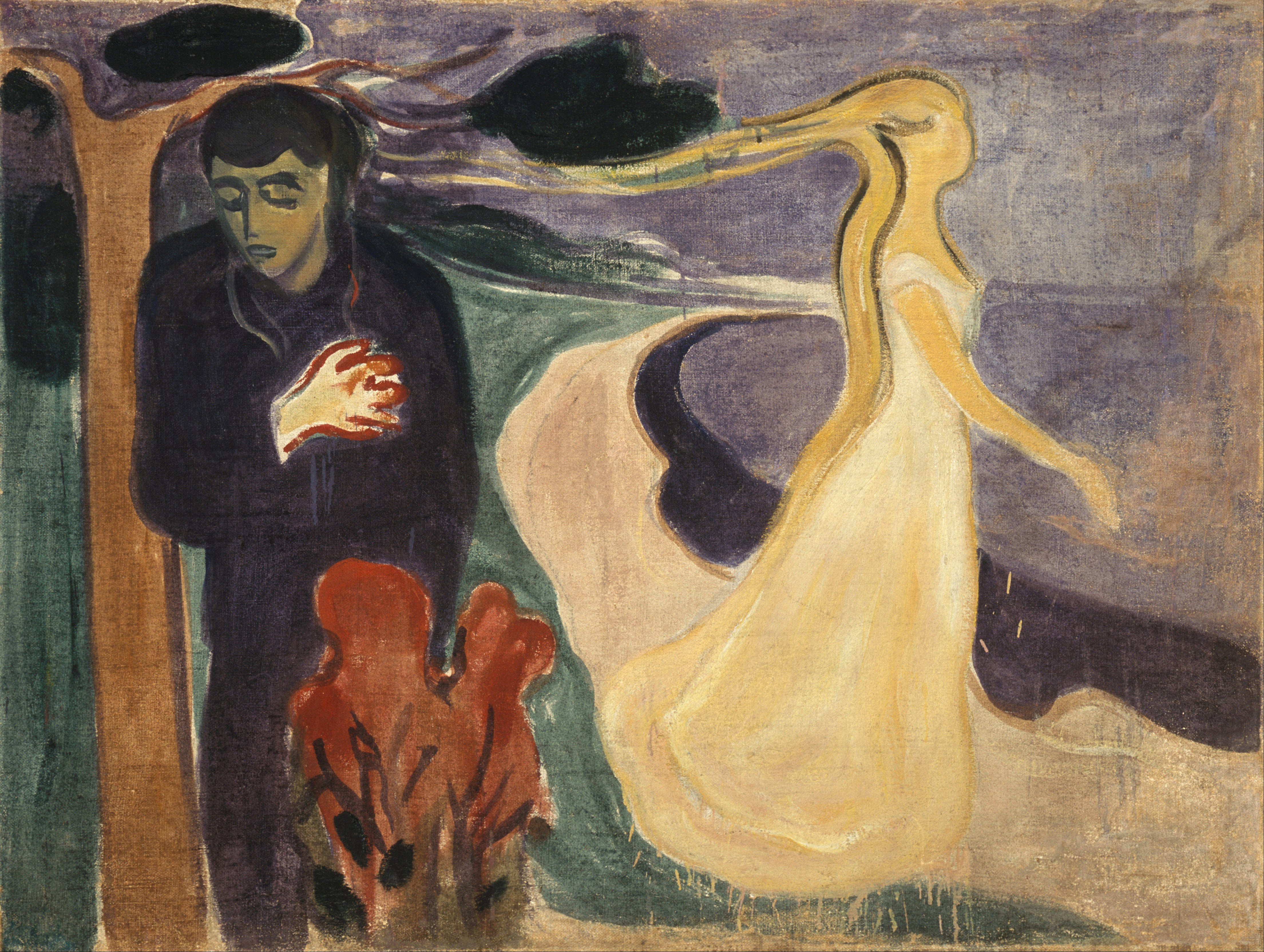
Separation 1896
This Edvard Munch painting is an oil on canvas painting which is one of the top artworks of Edvard munch on different human relations and conditions. It is an expressionist painting, and it uses a lot of symbolism. This painting presents the process of two people separating. It focuses on capturing the different perspectives of both parties during said separation. The contrasting colours of the two figures emphasize the difference in emotions. One of them, painted with dark colours and more defined contours, is heartbroken and does not want things to end. He keeps his hand on his bleeding heart and looks sorrowful. The other one, created with light colours and blurred lines, is ready to move on from the relationship. Her contours are blurred and slightly washes into the shoreline. The lack of facial expressions of the woman as she moves away from the man highlights her not feeling any strong emotions and not caring about the situation. Her hair flows out to the man's head as if they are both still tied together even though she is leaving him. The hair symbolism is a common occurrence in Munch's work. Unlike the woman, who takes a turn facing the sea, the man appears to be trying to move forward into the future. A crimson plant with its love and death symbolism blocks his way. He seems trapped in the present. The scenery is more subtle, but it still reveals how the man feels left behind. Nature is taking its course, forcing them apart by dividing them with the landscapes.
picture: https://upload.wikimedia.org/wikipedia/commons/1/1f/Edvard_Munch_-_Separation_-_Google_Art_Project.jpg
https://rrsuh.medium.com/an-analysis-on-separation-by-edvard-munch-28e07f3315cb
https://www.edvard-munch.org/separation/


These reminded me of the Munch's museum in Oslo. I've seen few things more depressing that their collection of Munch's paintings.
OdpowiedzUsuń